Dog won't eat dry food: why it happens and what to do
It sniffs the bowl and walks away, yet it would do anything for a piece of cheese. Most of the time the dog isn't ill: it has learned that kibble isn't the best thing on offer. Here are the causes, what to do and when you do need the vet.
In short
If your dog refuses kibble but happily eats treats and leftovers, it is usually not ill: it is a matter of habits and taste. Most dogs prefer wet food, cooked meat and warm food; kibble that has been open for a long time can go rancid; a bowl that is always full and plenty of extras take the appetite away. Fixed mealtimes, removing the bowl after about 15 minutes and no extras solve many cases; in others it makes sense to move to a complete wet food, gradually. If instead your dog eats nothing at all, is dull, vomits or loses weight, call the vet.
Not sure which one it will like? See the Trial Box →
Why won't my dog eat dry food?
Almost always because of habits or taste, sometimes because of a health problem. The most common causes:
- It gets something better: treats, leftovers and titbits from the table. If refusing kibble brings something tastier, the dog learns to refuse it.
- The bowl is always full: food available all day loses its appeal, and you won't notice if your dog eats less than usual.
- Old or badly stored kibble: in contact with air the fats oxidise and develop a rancid smell that dogs reject. It happens more easily with big bags that have been open for weeks.
- Preferences: in taste tests most dogs choose wet food over dry, cooked meat over raw and warm food over cold.
- Stress and change: a house move, a visitor, hot weather, another dog that intimidates it at mealtimes.
- Health: sore teeth, nausea, fever, pain or an illness.
My dog eats treats but not its food: is it ill?
Usually not: if the appetite for good things is there, the problem is choice, not hunger. It is the typical sign of a picky dog: it waits, because it has learned that sooner or later something better turns up.
Company matters too: many dogs eat more when another dog is nearby, and some picky eaters change once a second dog joins the family. On the other hand, a shyer dog may stop eating if another one intimidates it during meals.
A dog that refuses everything, even what it usually loves, is different: a health problem is more likely, and it is worth calling the vet.
How do I get my dog to eat its kibble?
With a few rules, kept for one or two weeks.
- Fixed mealtimes: two meals a day (more for puppies), always at the same time. Dogs quickly get used to meal times.
- Remove the bowl after about 15 minutes, even if it hasn't finished, and nothing until the next meal: most dogs learn to eat what they need in 5-15 minutes. Water stays available at all times.
- Stop the extras: no titbits from the table, and treats within 10% of the day's calories.
- Make the bowl more appealing: a little warm water on the kibble, a spoonful of wet food or some unsalted cooked meat. Warm food smells stronger.
- Check the kibble: smell it and, if it smells rancid, throw it away. Close the bag well, keep it somewhere cool and choose packs you finish within a few weeks.
- Let it eat in peace: somewhere quiet, away from other dogs if one intimidates it.
And don't change food every time it refuses: if every refusal brings something new, the dog learns that refusing pays.
Is dry or wet food better for a picky dog?
For many picky dogs wet food is the simplest way, as long as it is a complete food. It is not just an impression: kibble tends to be less palatable than wet food, and the clinical nutrition textbooks' tips for getting a poor eater to eat include exactly this: switching from dry to wet, warming the food or adding a little unsalted cooked meat.
Kibble is not the wrong food: if your dog eats it happily and is well, that's perfectly fine. And it doesn't make the difference to teeth that people think: what matters is the toothbrush, as we explain in our bad breath guide.
If your dog really won't eat kibble, the simplest solution is a complete wet food made of real meat. Our recipes have meat as the first ingredient (52% to 67%), are steam-cooked in their pouch and contain all the vitamins and minerals your dog needs: you serve them as they are.
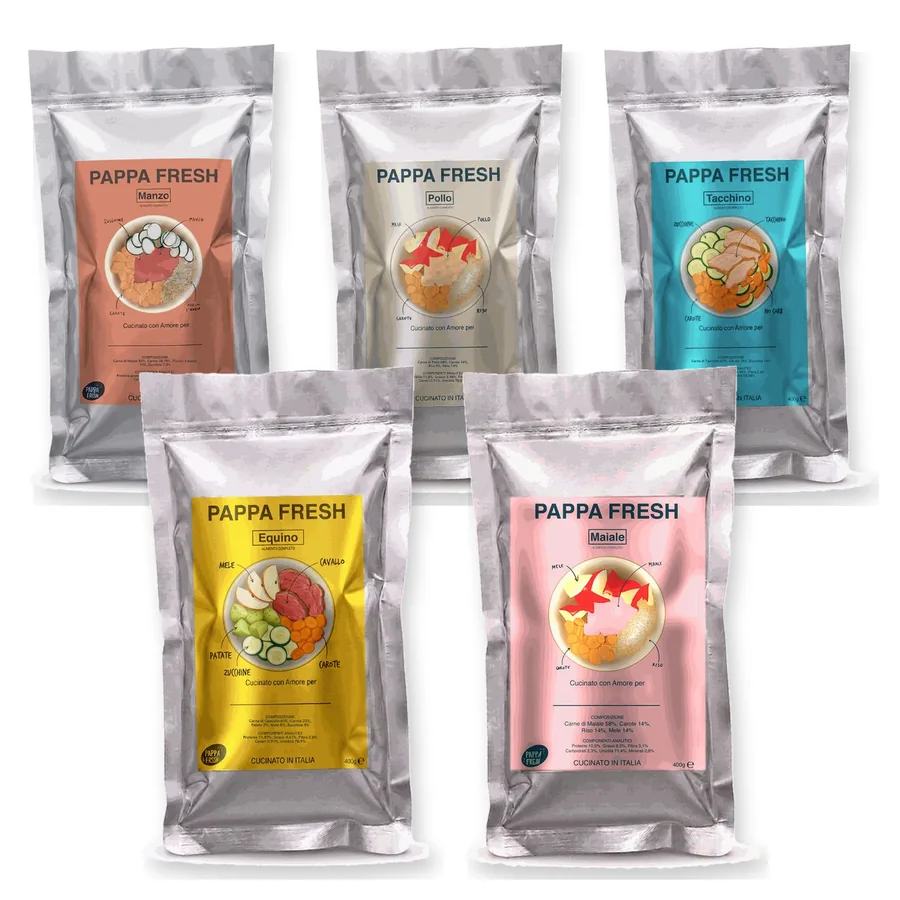
Not sure which one it will like?
Try all 5 recipes with the Trial Box
One 400 g pouch of each recipe: beef, chicken, turkey, horse and pork. Find out which one your dog prefers before choosing a plan. Your first order comes with our money-back guarantee.
How do I switch from kibble to wet food?
Gradually, over 7-10 days, mixing the new food into the old.
- Days 1-3: a quarter new food and three quarters kibble.
- Days 4-6: half and half.
- Days 7-9: three quarters new food.
- From day 10: only the new food.
Watch the amounts: wet food contains much more water, so for the same calories it weighs about three times as much as kibble. If you give "the same bowl", your dog will eat too little. Work the portion out from its weight and activity: our quiz does it in two minutes.
When should a dog that isn't eating see the vet?
When it refuses everything, not just kibble, or when there are other symptoms. Call the vet:
- if an adult dog has eaten nothing for more than a day, or sooner if it vomits, has diarrhoea, is dull or in pain;
- straight away if it is a toy-breed puppy: in the first months of life even a short fast can make its blood sugar drop too low;
- if it isn't drinking, or is drinking much more than usual;
- if it chews on one side only, drops food, drools or has very bad breath: it is often the teeth;
- if it is losing weight or eating less and less over weeks;
- if it is older, eats less and tires sooner or coughs: among dogs with heart disease, 34% to 84% eat less than usual (read our guide to heart disease in dogs).
Which dogs most often have trouble with kibble?
Small dogs and flat-faced dogs, mainly because of their teeth. A sore tooth makes chewing a hard kibble hard work.
- Small and toy breeds such as the Chihuahua, Yorkshire Terrier, Maltese and Poodle: in the VetCompass study of more than 22,000 dogs, the risk of periodontal disease fell as body weight rose, and was among the highest in the Toy Poodle and the Cavalier King Charles.
- Flat-faced breeds such as the Pug, French Bulldog and Shih Tzu: in the same study they were 25% more likely to have periodontal disease.
- Older dogs: dental problems increase with age in every dog.
If your dog is one of these and has started refusing kibble, have its mouth checked before changing food.
Where Pappa Fresh fits in
Pappa Fresh is a complete wet food: real meat as the first ingredient (52% to 67%), a single animal protein per recipe, vegetables and a vitamin and mineral supplement, steam-cooked and sterilised in the pouch. It keeps out of the fridge for up to 2 years and you serve it as it is.
There are five recipes: Beef, Chicken, Turkey, Horse and Pork. If you don't know which one your dog will prefer, the Trial Box lets you try them all.
And on your first order there is our guarantee: if your dog doesn't like it, we refund you (just keep at least half of the product and write to us within 30 days of delivery; details in our refund policy).
5 pouches of 400 g, one of each recipe, no subscription.
Frequently asked questions
How long can a dog go without eating?
A healthy adult dog that skips a meal but drinks, plays and is lively is usually not an emergency. If it has eaten nothing for more than a day, or sooner if there are other symptoms, call the vet. With toy-breed puppies, don't wait.
My dog won't eat in the morning: is that normal?
Often, yes: many dogs aren't very hungry in the morning and eat happily in the evening. If it is otherwise well, you can offer the meal a little later; if it skips the evening meal too, talk to your vet.
Can I add something to kibble to make my dog eat it?
Yes: a little warm water, a spoonful of wet food or some unsalted cooked meat make it more appealing. Keep the additions within 10% of the day's calories unless they are a complete food.
Is old or long-opened kibble bad for dogs?
Over time and with air the fats go rancid: the kibble loses flavour and the dog refuses it. If it smells rancid or mouldy, throw it away. Close the bag well and choose packs you finish within a few weeks.
My dog only eats wet food: is that a problem?
No, as long as it is a complete food. A complete wet food covers everything your dog needs, and many dogs prefer it. Just remember that it weighs more than kibble for the same calories: work the portion out carefully.
Sources
- Case, Carey, Hirakawa, Daristotle, Canine and Feline Nutrition, 2nd ed. (2000) — taste preferences (wet food, cooked meat, warm food), the effect of company, oxidised fats
- Fascetti, Delaney, Larsen, Villaverde (eds), Applied Veterinary Clinical Nutrition, 2nd ed. (2023) — ch. 7 (meals eaten in 5-15 minutes, always-full bowls, extras within 10%) and ch. 18 (appetite and tips to encourage eating)
- Le Guillas et al. 2024, Animals — palatability of dry pet food and fat oxidation
- O'Neill et al. 2021, Journal of Small Animal Practice — periodontal disease in 22,333 dogs in the UK (VetCompass)
- Wallis et al. 2025, BMC Veterinary Research — wet and dry food and gum health in Yorkshire Terriers
- Merck Veterinary Manual — Congenital and Inherited Cerebral Disorders in Small Animals (hypoglycaemia in toy-breed puppies)
Pappa Fresh editorial team
Written by the Pappa Fresh editorial team from published veterinary studies (see sources). Not a substitute for your vet's advice.
Read next:
- Dog bad breath: where it comes from and what to do
- Dog gas and flatulence: why it happens and what to do
- Shiny dog coat: what really matters in the diet
- Dog diarrhoea: what to feed your dog and when to worry
- Foods dogs can't eat: what's toxic and what to do
- Feeding an older dog: what changes and what to give
- Bloat in dogs (GDV): signs, risks and what to do
- Constipation in dogs: what to give and when to worry
- 5 Dog Feeding Mistakes (and How to Avoid Them)